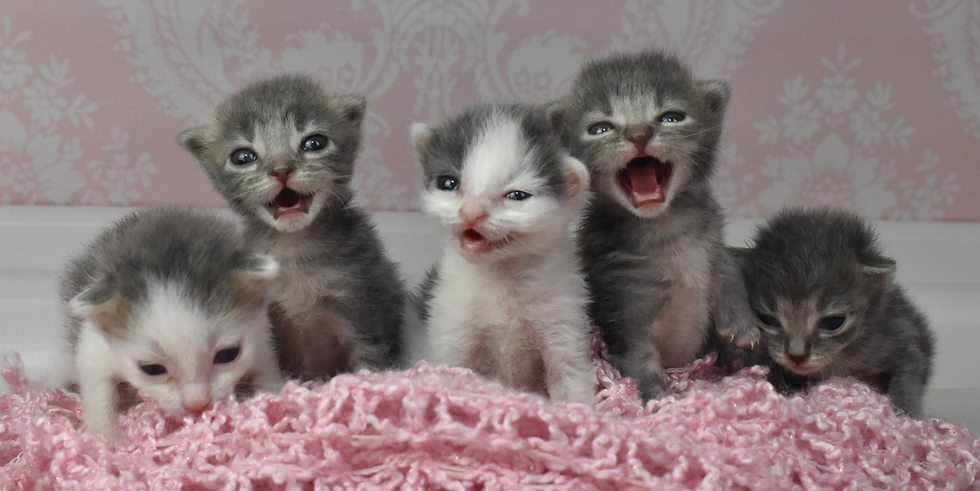
Spring = Breeding Season
Spring is in the air and so is the breeding season…
In spite of our tireless efforts, thousands of cats and kittens will not survive to see Christmas this year. As council pounds start to over flow with pregnant animals, mums with babies and orphaned infants, we are reminded of just how important it is to desex our cats. Desexing is also vital for maintaining our cats’ health, increasing their life span and preventing antisocial behaviour. As soon as a female cat gives birth she is immediately ready to mate again!
Many cats are bred by accident, because owners don’t get around to desexing their cats. If you are aware of any undesexed cats, make it a priority to get them desexed now (even if they are a stray cat who you feed at work or in your street). The only solution, the only option, is preventative. If you are experiencing financial difficulty, there are subsidised desexing programs available in QLD to help you meet these costs. The National Desexing Network (NDN) is a nationwide referral system for discounted desexing made available to pet owners in financial need. www.ndn.org.au
Feline Immunodeficiency Virus (FIV), also referred to as Feline AIDS, is an infectious disease and undesexed cats are the main carriers of FIV. Both fighting and mating is the most common way that FIV is spread, because infected cats have large amounts of the virus present in their blood. Though a vaccine has been developed, the protection it offers is far from complete.
THE FACTS
- Desexed cats have a reduced risk of getting cancer or other diseases of the reproductive organs, including testicular and prostate cancers in males; and ovarian cysts and tumours, uterine infections and breast cancer in females. Desexed cats generally live longer and healthier lives. On average, a desexed cat lives for 12-15 years, compared to only 3 years for an entire cat.
- Desexing reduces cats’ desire to roam and therefore reduces their risk of being hit by cars or involved in fights.
- Mandatory registration costs are less expensive for desexed cats.
- The desexed cat is less likely to mark its territory by ‘spraying’ in the house.
- The desexed cat is less likely to develop aggressive tendancies.
- Desexing eliminates sexual frustration
DEBUNKING THE MYTHS
MYTH: My cat will get fat & lazy if it is desexed.If you find your cat is putting on weight, it is recommended that you seek advice from your vet. Overweight and obesity result from a combination of too much food and too little exercise.
MYTH: My female cat should have one litter before she is spayed. Not at all, in fact it is better to have her spayed before 4 months of age to prevent an unwanted pregnancy. It is a common belief amongst owners of female cats is that they will benefit from having at least one litter of kittens. The opposite is actually true – having a litter of kittens is stressful on the mother, and expensive for the owner. And as noted above, desexing removes the risks inherent in mating, and of suffering certain forms of cancer of the reproductive organs.
MYTH: Cats must be 6 months before they can be desexed. With modern anaesthetics, cats can now be safely desexed as young as 8 weeks of age. In fact, kittens bounce back extremely quickly after desexing and take less recovery time than adults. It costs less to desex a female cat than to raise a litter of kittens and the cost of neutering a male cat is even less. After surgery, your cat will be back on its feet and normal again the next day.
MYTH: My children should experience the miracle of birth. Even if children are able to see a pet give birth—which is unlikely, since it usually occurs at night and in seclusion—the lesson they will really learn is that animals can be created and discarded as it suits adults. Instead, it should be explained to children that the real miracle is life and that preventing the birth of some pets can save the lives of others.
MYTH: But my pet is a purebred. So is at least one out of every four pets brought to animal shelters around the country. There are just too many cats, mixed breed and purebred, and not enough homes for them all.
For more information on desexing your cats or kittens, please contact us at littlepawskr@gmail.com.